Saturday, October 28, 2006

Making the grade

In pursuit of better student writing

In Chicago public schools, district officials are working on a plan that would require students in certain grades to pass a writing exam before moving to the next grade.

Since the No Child Left Behind federal law was passed five years ago, many schools, especially those in low-income communities, have focused most of the instruction time on reading and math - —the two subjects where the law requires student testing. As a result, critics contend, writing has been downplayed.

More from the Chicago Tribune.


Tags: , , , ,

Wednesday, October 18, 2006

Wordplay for high school students

The National Vocabulary Championship seeks applications

Here's an innovative way to earn money for college. Take part in the National Vocabulary Championship (NVC), an initiative sponsored by The Network for Games, GSN. The initiative uses competition and wordplay to engage and reward high school students, educators and parents, teaching them the value of a strong vocabulary.

Participating students and in-school coaches gain access to preparation materials through the NVC website. Join the challenge! Maximum award: $40,000 toward college tuition. Eligibility: High school students across the country. See the GSN website for specifics.


Tags: , , , , ,

Thursday, October 12, 2006

U.S. population set to hit 300 million

What we can expect from the next 100 million Americans

Sometime next Tuesday, the U.S. population will surpass 300 million, according to U.S. Census Bureau estimates. The growing population, fueled largely by immigrants and their children, has implications for the economy and the social and political climate. Immigrants, legal and illegal, account for about 40 percent of population growth.

The public is quite conflicted on the impact of immigration and many hold positive and negative attitudes about legal immigration simultaneously. Six in 10 Americans say immigration is a good thing for the U.S., and half of Americans say immigrants contribute to the country rather than cause problems.

Yet, half of the public says there are too many immigrants in the U.S. Four in 10 Americans say
immigrants improve food, music and the arts in the U.S., but many Americans believe immigrants negatively affect the economy, taxes and crime. People are also divided on whether immigrants become productive citizens or if they cost taxpayers too much by using government services.

But what do immigrants think about life in the United States? Public Agenda, a nonpartisan opinion research organization, surveyed immigrants in its Now That I'm Here study. According to Public Agenda, the study revealed an overwhelming majority committed to working hard and staying off government assistance. Almost nine in 10 say it's extremely important for immigrants to learn English and their views on bilingual education are similar to
the general public.

But six in 10 say there is at least some anti-immigrant discrimination in the U.S. Three in 10 say they have personally experienced discrimination.

Find out more Behind the Headlines.

Related: Christian Science Monitor


Tags: , , , ,

Tuesday, October 10, 2006

A 'big girl' remembers (student guest post)

The Forger
by Winnie C.

Early one Tuesday morning, I woke up to attend another happy kindergarten day at Washington Elementary School. My daily routine was to wake up, get dressed, eat breakfast, go to my babysitter’s home, and go to school from there. After arriving at my babysitter’s home, I approached my best friend, Chanell. She was about as tall as me, with long curly hair and a couple teeth missing because she was growing up. Chanell and I were some of the brightest kids in our class.

We always shared our homework with each other before going back to school. But there was a problem with mine. I always completed my homework, but I forgot to get it signed. My school teacher, Ms. Brown, always wanted us to get our parents to sign our homework. I think she liked knowing the fact that parents would be more informed on what we were learning. But it was too late to ask my mom to sign it. She’d already left for work.

“Aw, man, I forgot to have my mommy sign my paper!” I exclaimed to Chanell.

“Well, have my grandma sign it,” advised Chanell.

“No, I’ll just do it myself. She won’t know,” I said quietly.

“Are you sure, Winnie?” she asked me.

“Yes,” I replied.

Once arriving at school, the hallways seemed longer than ever before. The classroom doors seemed taller. At this point, I was a little worried but I never let it show. I slowly walked in my class and placed my paper on Ms. Brown’s sandy brown wooden desk.

“I sure hope the red ink made it look like Mommy’s name,” I thought to myself. I know Chanell told me not to do it, but I really needed it signed. My mommy always told me to be a big girl, so I am being one now. Big girls sign papers.

“Winnie, what is this?” asked Ms. Brown.

“Ms. Brown, it’s my homework,” I replied.

“Why does your mother’s signature look so different?” she asked.

“Umm, my mommy just started going back to school,” I replied.


Winnie C., a high school senior in St. Louis, wrote this paper for her Advanced Placement English class. After completing high school, she plans to pursue specialized training in culinary arts and earn her bachelor's degree in hospitality and business. Winnie's career goal is to open up and manage her own restaurant.


(c) 2006 Media by Sistrunk

Tags: , , , , ,

Friday, October 06, 2006

Rich paydays for blogs-turn-books

Some bloggers sign deals with traditional publishers

Could the blogger book craze fizzle from overkill? A Reuters report examines the "wave of hype."

For another look at publishing trends, check out a post by Georganna Hancock of Writer's Edge.


Tags: , , , ,

Wednesday, October 04, 2006

Appearance counts!

Preparing for on-camera interviews

Recently, we devoted some space to tips for successful TV interviews. Demonstrating good verbal and nonverbal communications is important. So is appearance.

Clothing and makeup are also important when it comes to on-camera interviews. You don’t always get advance notice, but if you do, follow these guidelines.

For men:

  • Blues, tans, and grays are best
  • Blue or pastel shirts
For everyone:
  • Appear in an outfit that explains your profession (e.g. teachers, doctors, construction workers, businessmen).
  • Don’t wear sunglasses outside or photogray glasses inside. They make you look as if you're hiding something.
In addition to the rules above, women should observe the following guidelines:

  • Reds, grays and blues are acceptable colors for women.
  • Avoid sexy or frilly outfits.
  • Avoid clunky or glittering jewelry. They are distracting.
  • Don't wear too much lipstick. Use a shade that looks natural.


Tags: , ,

Tuesday, October 03, 2006

Learning how to handle criticism

Don't take it personally

Feeling hurt because a critic cut your masterpiece to shreds? You're not alone. Criticism and bruised egos are inherent in publishing and communications.

Here are some tips on how to cope with critics.

  • It’s natural to feel hurt about criticism, but don’t drown yourself in pity. Get over it.

  • All critics are not alike. Some are just plain cranky while others consider themselves experts. If you’re lucky, you’ll run into people who offer you constructive comments – objective opinions that can help you improve your work.

  • Understand that some critics will attack anyone or anything just to draw attention to themselves – to make themselves feel superior. Don’t take the remarks personally. Shake them off.

  • Separate the critic from the criticism. Realize that any criticism – even from cranks – may carry a smidgeon of truth. Be open to the fact that your work could use some fine-tuning, but never allow criticism to dampen your self-confidence.

  • Don’t dwell so much on criticism that you allow it to drain your energy and motivation. Deal with it, and then move on.

  • Understand that ALL writers have their critics. You don’t have to like it, but don’t let it kill your confidence.

It’s a sure bet that the more you achieve, the more attention you’ll attract from critics. If you learn to handle criticism in a calm and positive spirit, you’ll definitely grow as a writer.


Digg!

Monday, October 02, 2006

Breaking the chain of abuse and self-destruction

Declaring victory over pain

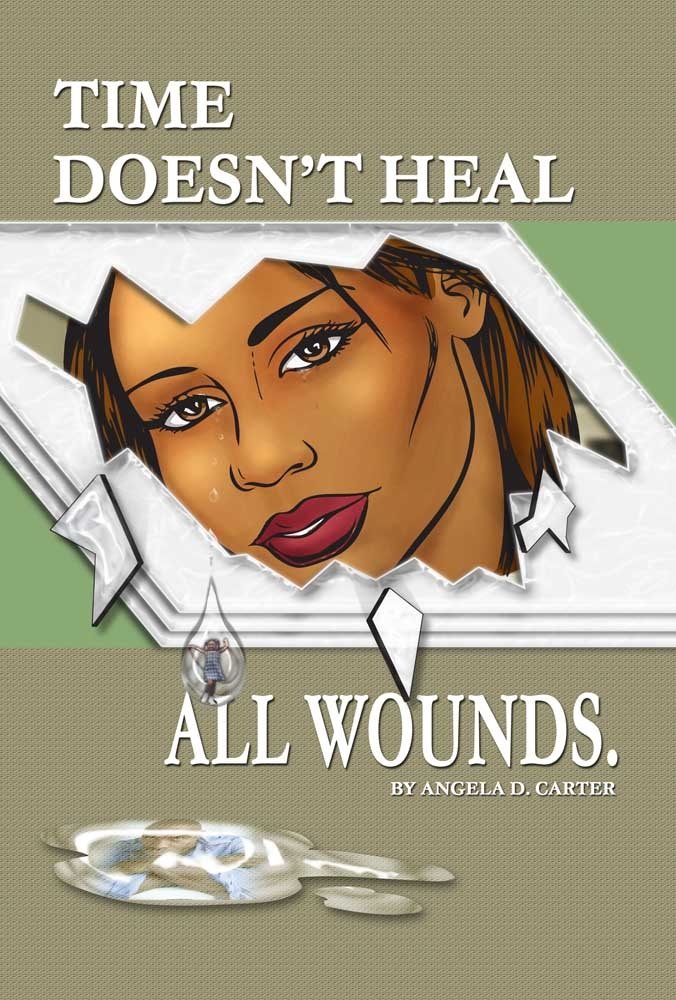
Sordid little secrets. It's tough enough dealing with them as an adult. But what happens when you're a girl with dreams -– and hopes of blossoming into sweet womanhood? Find out what happens when innocence crashes head-on into sex, violence, abortion and drugs. It's all in Angela Carter's page turner, Time Doesn't Heal All Wounds.

The novel chronicles the lives of Deb and Honey, two young friends with distinctly different personalities. But the pair does share something in common - the desire to heal from a painful past.

Deb is trying to make it through high school. One minute she's dreaming about graduating, going to college and marrying her prince charming. But "happily ever after" isn't exactly in the script. Instead, Deb suffers an onslaught of verbal abuse and estrangement from her mother. In a twist, she falls in love with an irresistible night club owner who teaches her a few things about life.

"Vivacious" could be Honey's middle name. She's a gorgeous teen with attitude. Street-smart and sassy. She hides her lack of self-confidence by any means necessary. Honey prefers her men controlling, dominating and married. Her early exposure to sex and an "I don't give a damn" view of life spell one thing for Honey: self-destruction.

Carter knows about abuse and betrayal all too well. Her debut novel is inspired, in part, on heartaches she endured in her own life.

"The verbal abuse started about the time I entered sixth grade," the author revealed. "One of my parents would yell obscenities at me. I was told I was ugly, unworthy, dumb and stupid. My parent would always compare me to a friend‚’s daughter, who could do no wrong."

Carter added, "I went through life feeling worthless and full of hurt and pain. I needed an outlet - a sense of security. As a result, I started looking for love in all the wrong places. Little did I know that the people I was trying to gain love from didn't love me."

The author shares at least one thing in common with her character Deb. Both developed a closer relationship with God and turned their lives around, celebrating victory over pain.

Carter is currently working on her master's degree in social service. This single mom of two sons earned her bachelor's degree in health care administration.

Time Doesn't Heal All Wounds is published by Prioritybooks Publications of St. Louis. For more information about the book, visit the author's website, whentimeheals.com.